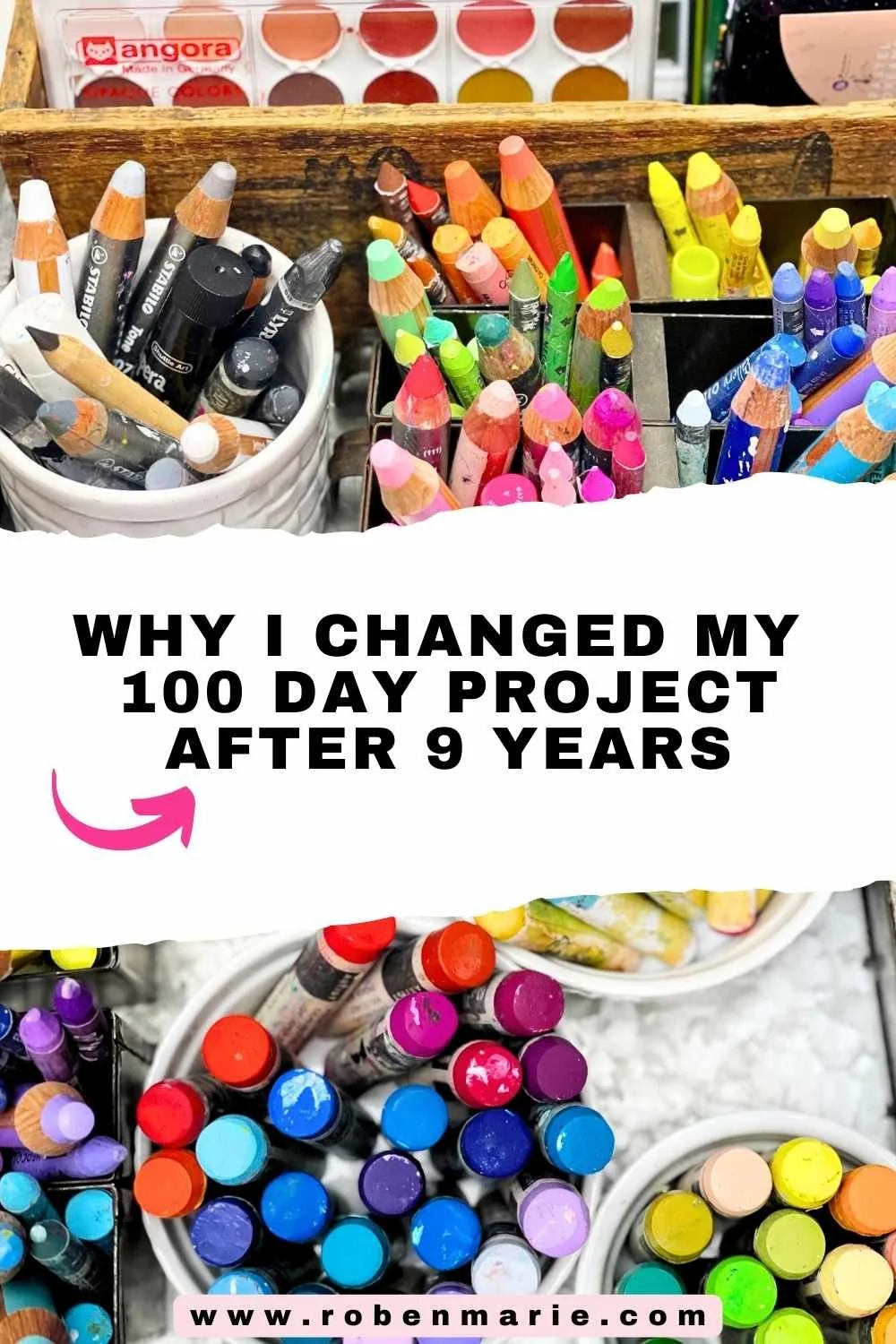
100 Days of Creative Drifting: a Sketching Practice
What is Creative Drifting?
For nine years, I’ve done the 100 Day Project the safe way. I chose themes where I felt confident in the process. Little books. Collages. Things I knew how to make. Projects where I could settle in, show up, and trust myself to follow through. And I loved those projects. Truly.
But this year—my 10th year—feels different. This year, I’m choosing something that scares me a little. I’m choosing to sketch.
That sentence alone makes my stomach feel a bit woozy.
Sketching has always felt more exposed to me. Less protected. There’s nowhere to hide behind layers or clever construction. It’s just marks. Lines. Decisions made in real time. And a quiet voice that sometimes whispers, What if I’m not good at this? What if I don’t like what I make?
So yes, there’s excitement here. But there’s also nerves. And a real sense of stepping into unfamiliar territory.
That’s where creative drifting comes in. Creative drifting is my permission slip.
Instead of committing to one sketchbook, one medium, or one “right” way to work, I’m letting myself drift—between tools, surfaces, and approaches—day by day. Some days it might be pencil on plain paper. Other days, maybe ink on a scrap that’s already covered in paint, sitting on my desk waiting to be used.
I’m not planning it all out.
I’m not mapping 100 outcomes in advance.
I’m showing up and seeing what calls to me.
This project isn’t about creating 100 finished sketches. It’s about practicing. Showing up. Staying curious. Though if I end up with a fun collection of sketches along the way? I can’t say I won’t be thrilled.
Creative drifting gives me room to practice without pressure.
I don’t know exactly where these 100 days will lead. I don’t know what the sketches will look like at the end.
But I’m curious.
And that feels like the best place to begin.

Choosing a Different Way Forward
This year marks my tenth time participating in The 100 Day Project—nine completed projects behind me and 900 days of showing up, experimenting, and making along the way.
That number matters, but not because it represents finished pieces or productivity. It matters because it reflects commitment. Repetition. A willingness to return to the work again and again—even when it’s uncomfortable, imperfect, or uncertain.
After nine years, I know I can do this. I know how to pace myself. I know how to choose projects that feel familiar and doable.
And this year, I’m ready to challenge myself.
Not by doing more—but by doing something different.
By choosing a direction that stretches me instead of protecting me.
By stepping into a practice that feels a little less certain and a little more revealing.
So before day one begins, I spend time preparing—not to control the outcome, but to support the process. Because 100 days is a long conversation with yourself, and how you begin matters.
Which brings me to preparation.
Preparing for my project
Here’s one thing that hasn’t changed over the years: I don’t wing it.
This project is a marathon, not a sprint, and I’ve learned that a little preparation goes a long way. Not to control the outcome—but to reduce friction, minimize frustration, and make it easier to return to the work day after day.
I prepare because 100 days is a real commitment, and I like to set myself up in a way that supports consistency and enjoyment.
1. Setting My Focus (Not a Fixed Outcome)
In past years, preparation meant choosing a clear theme and committing to producing 100 finished pieces. This year looks different.
Instead of focusing on what I want to make, I’m focusing on how I want to practice.
My anchor this year is sketching, supported by creative drifting—moving between tools, materials, and surfaces without locking myself into a single format or result. The intention isn’t to produce 100 of anything. It’s to show up, explore, and stay curious.
Before starting, I still ask myself a few grounding questions:
What am I genuinely interested in exploring right now?
What will help me document and reflect along the way?
Where do I need flexibility instead of pressure?
Those questions haven’t changed—but my answers have.
2. Gathering and Organizing My Supplies
One of my favorite parts of preparing is spending time with my materials.
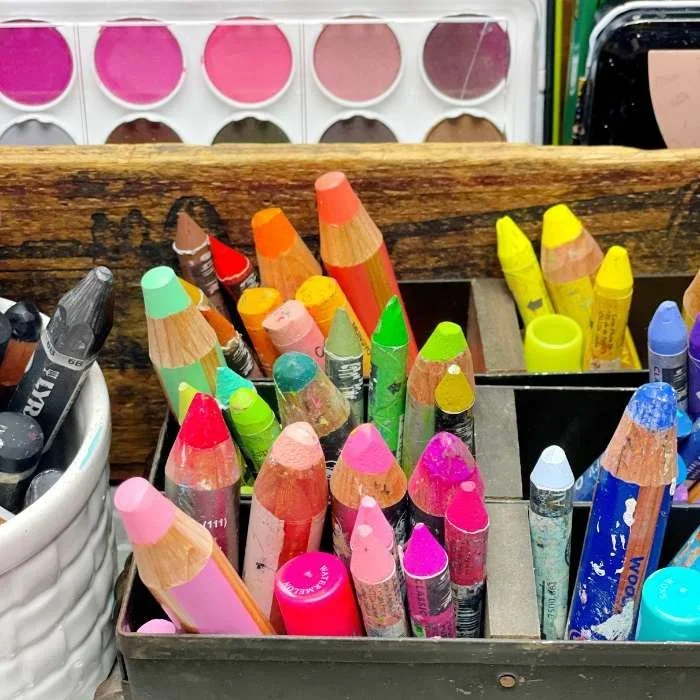
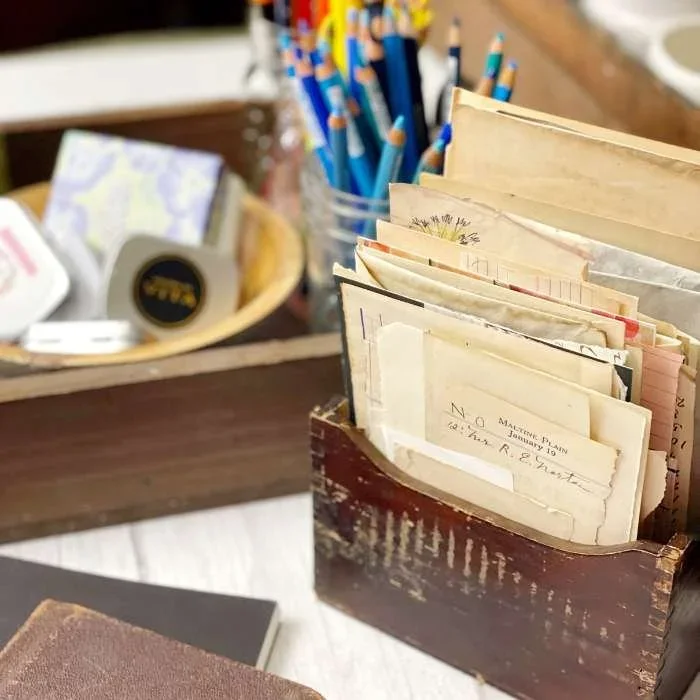
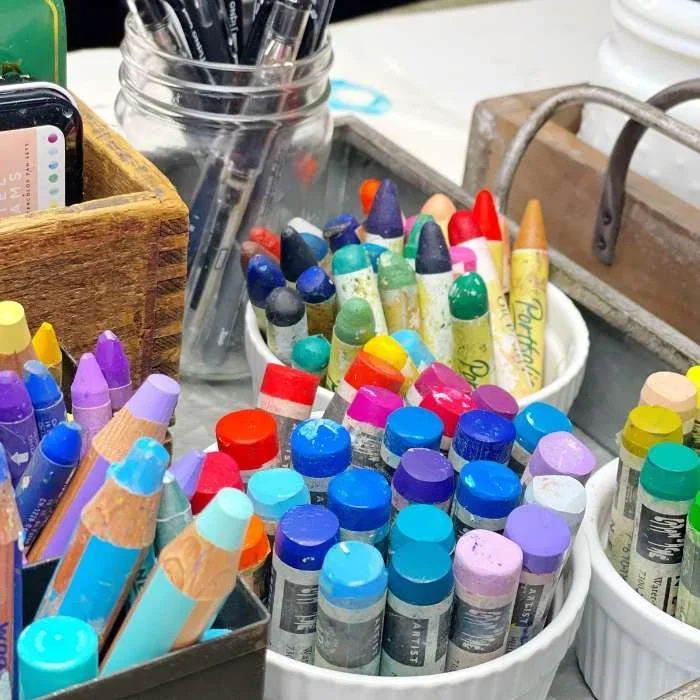
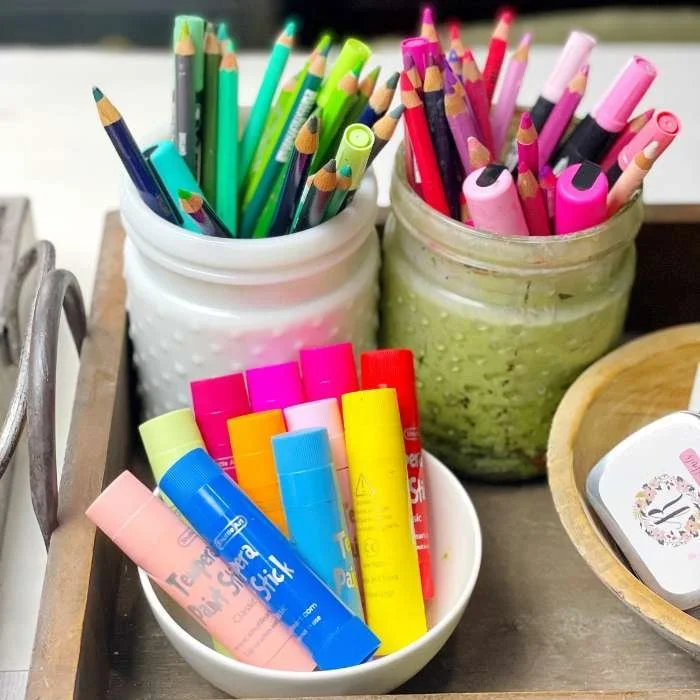
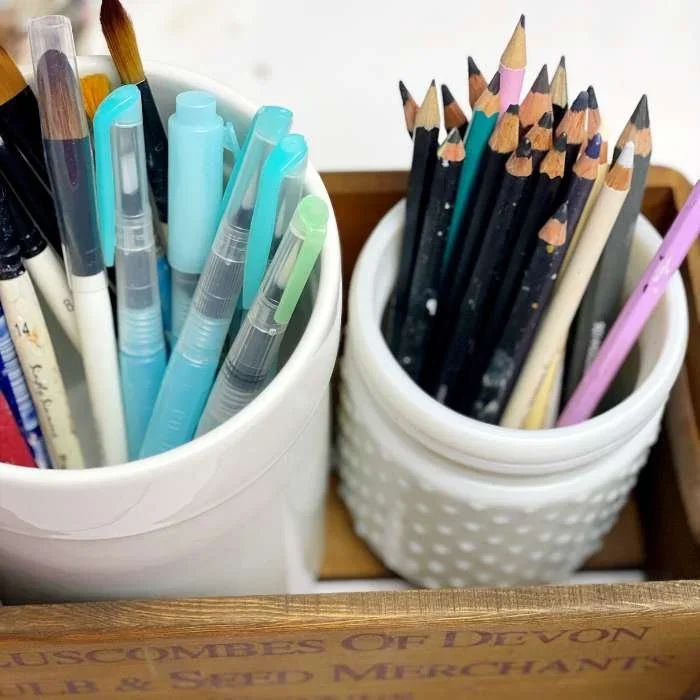
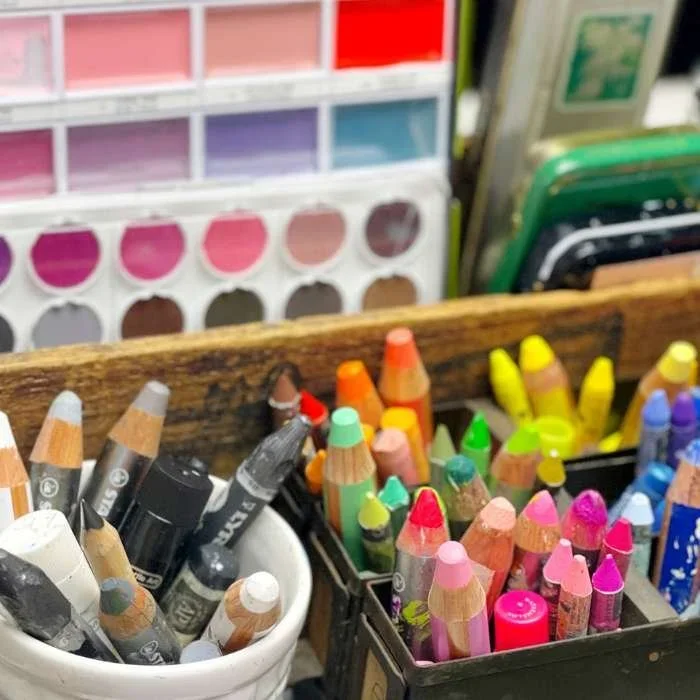
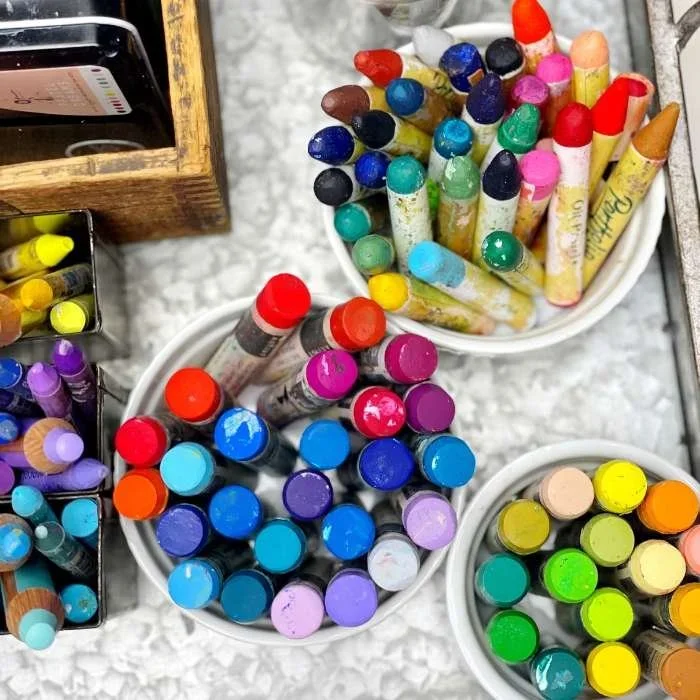
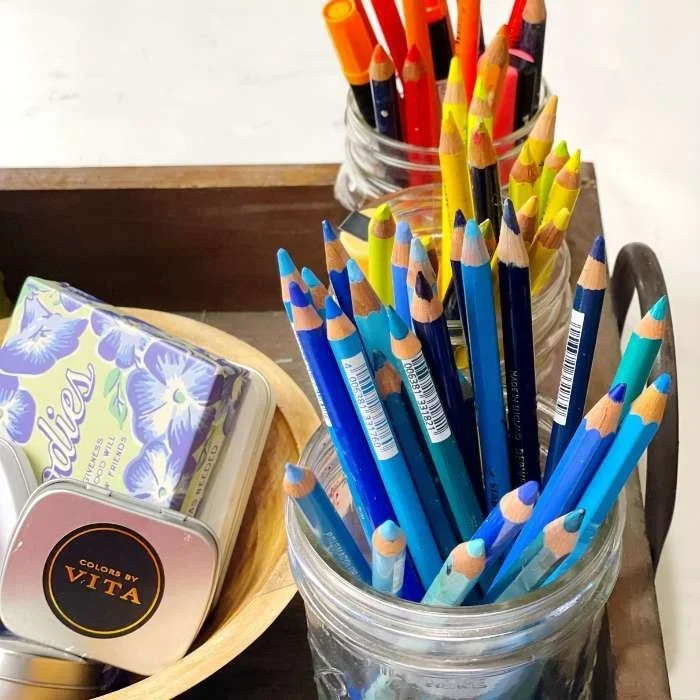
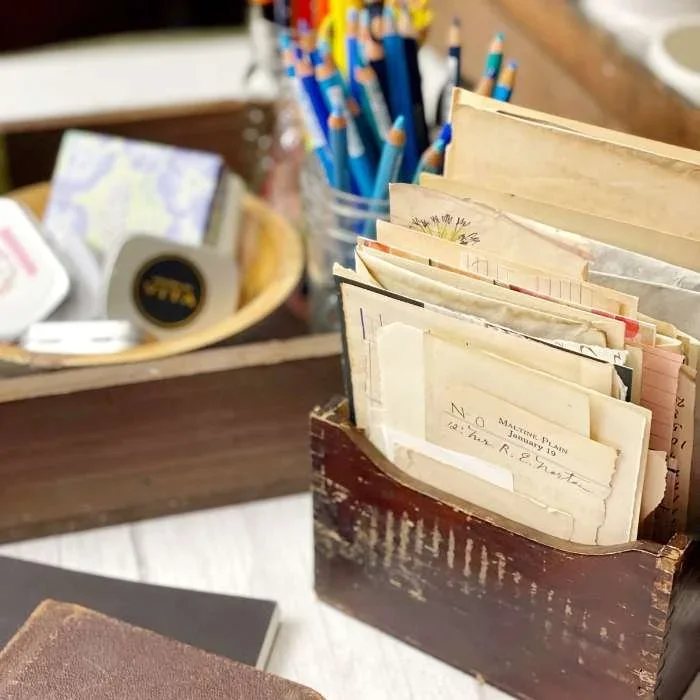
This year, instead of pulling supplies for a specific end result, I gathered the tools I know I’ll enjoy reaching for: pens, pencils, crayons, watercolors, inks, brushes, and a variety of papers and substrates.
I organized everything, mostly by color. It’s visually inspiring, but it also shifts how I begin each day. Instead of asking What tool should I use? I start with What color is calling to me? and let the materials lead from there.
I also spent time experimenting with paper—testing different surfaces to see how they respond to various mediums. The papers I enjoyed using are now stacked and ready on my desk. The ones that didn’t resonate were quietly set aside.
The goal isn’t abundance—it’s ease. When materials are visible and within reach, it’s much easier to begin.
3. Building in Room for Real Life
Another thing experience has taught me: life will intervene.
There will be busy days, tired days, travel days, and days when creativity feels just out of reach. I’ve learned to build in flexibility—sometimes starting early, sometimes working ahead, always allowing myself grace when things don’t go exactly as planned.
If I miss a day, I don’t panic.
This is my project, done my way.
What Experience Has Taught Me
After many years of doing this challenge, a few truths continue to guide me:
✨ Keep it simple. Overcomplicating things makes it harder to stay present.
🎨 Batching is helpful. Some days are for experimenting, some for prep, some for finishing. It all counts.
📝 Reflect and adjust. Regular check-ins help me notice what’s working—and when something needs to change.
🥳 Protect the joy. If the project starts to feel heavy or forced, it’s a signal to shift.
Ready to Begin
The next 100 days aren’t about perfection. They’re about showing up, staying curious, and letting the work unfold one day at a time.
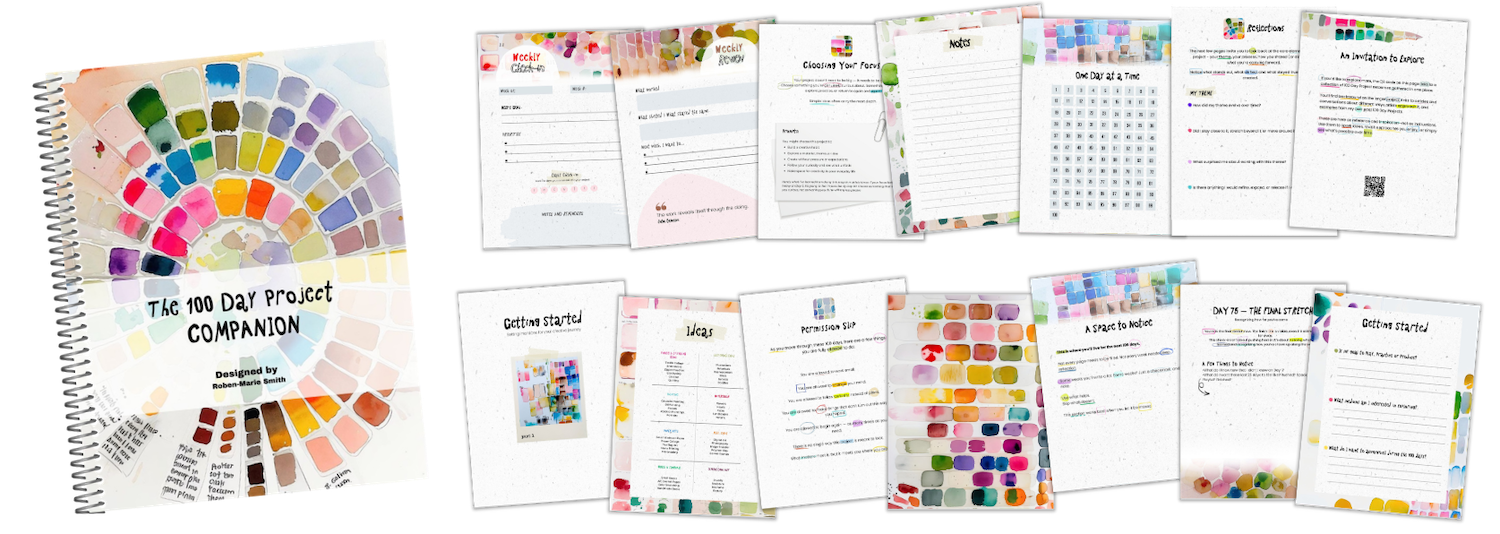
To support that process, I’ve updated my 100 Day Project Companion—a gentle place to reflect, notice patterns, and document the journey as it evolves. It doesn’t tell you what to do. It simply offers something to return to along the way.
With my space ready and my materials close at hand, I’m ready to begin.
The 100 Day Project Companion
Available in Print + Digital download
Notice, Reflect and Stay Connected
Whether this is your first year or your fifth, having support without pressure makes all the difference. The 100 Day Project Companion offers gentle structure, thoughtful prompts, and space to notice what’s unfolding - without needing to track every detail or stay perfectly on schedule.