
10 Years of the 100 Day Project: How Learning to Sketch Changed My Creative Practice

This year was my tenth year doing the 100 Day Project.
Ten years. Ten completions. And this year, more than any other, I almost didn’t start.
Because I was scared.
For nine years, I made a hundred of something I already loved. Something I already knew. Something that felt safe in my hands. This year, I decided to learn to sketch — something I’d wanted to do for years and kept quietly putting off. The 100 Day Project became the container I finally needed to say yes.
But “yes” didn’t come easy.
Even in the days leading up to Day 1, I was talking myself out of it. The voice in my head was loud and it knew exactly what to say: you’ve wanted to do this for years and you haven’t. What makes you think you can now?
I didn’t have a good answer. I wasn’t sure what sketchbook to use, what paper worked with what media, or honestly, whether sketching even meant more than a pencil and a pen. I showed up anyway. Unsure. A little shaky.
The middle stretch was a roller coaster.
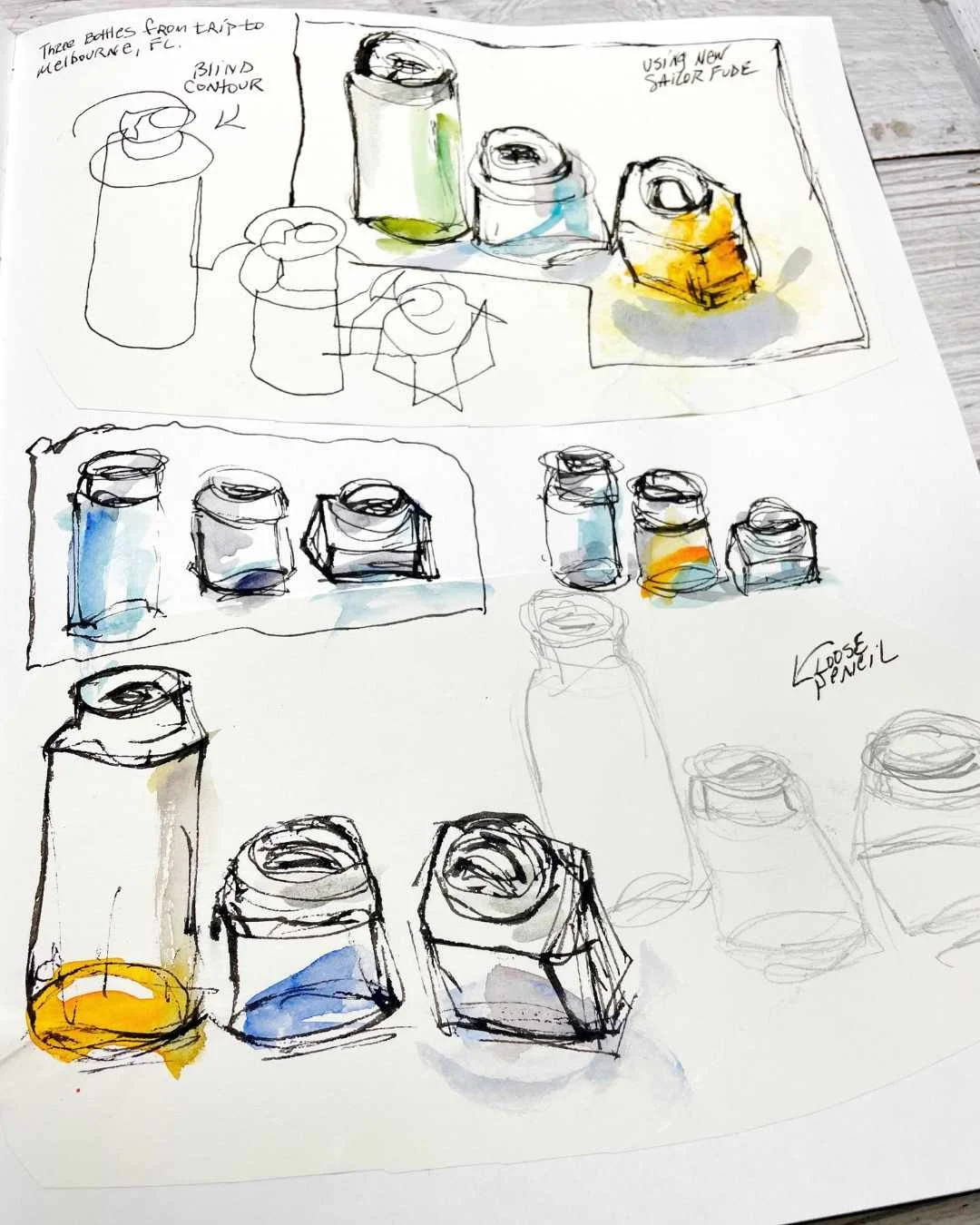
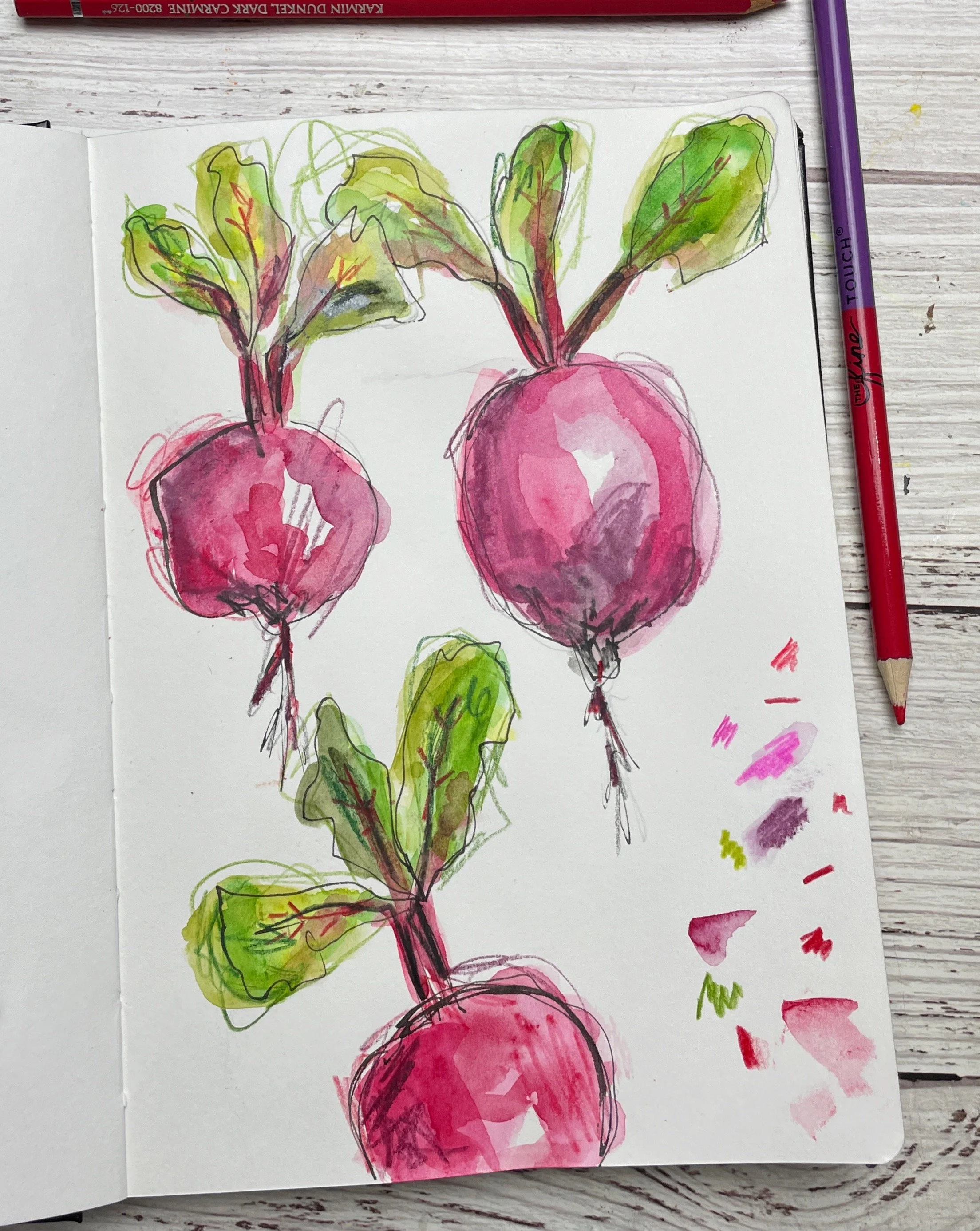
There were days I loved what I made. Days I couldn’t wait to sit down and sketch fruit, or a landscape, or whatever theme I’d chosen — fruits and veggies, packaging like ketchup bottles and Old Bay tins, cups and glasses, pencil sketches that surprised me. I’d finish a page and feel something settle in me — quiet and good.


And then there were the other days.
Around Day 70, I did a page I hated. So I turned to the next one. Hated that one too. I ended up cutting both pages out of the journal. Just… ripping them out. And I sat there thinking: what if I can’t do another sketch I actually like? Do I even want to keep going?
I kept going.
One of the unexpected gifts of this year was a YouTube video.
I was watching an artist sketch, and she started with Caran d'Ache Classic Neocolor II water soluble crayons — not a pencil, not a pen. That moment was enlightening.
Suddenly the whole project felt bigger. Markers. Pastels. Crayons. There were so many ways to sketch, and I got to figure out what I liked and what I didn’t.
That’s the thing about stepping into something unfamiliar. You don’t always know what you’re going to find on the other side.


What I Used: Supplies That Worked (and Didn’t)
Part of the learning curve was figuring out what tools actually worked for me. Here’s an honest look at what I reached for and what I’d recommend:
Sketchbooks
While cheap sketchbook paper has its place, I had much greater success with quality paper. My favorite was the Etchr B5 Portrait Sketchbook — Hot Press Mixed Media, 100% Cotton, Hardcover. Worth every penny.
Pens
Fountain pens took some getting used to, but once I got the hang of them I really loved the versatility in the lines. My favorite was the Sailor Fude Fountain Pen 55 Degree Nib
I also frequently reached for:
Uni Pen 0.03 in a set
Uni Pen 0.2 in a set
Copic Multiliner .05 in a set
Pencils
Not my favorite: Lead pencils — I used them but they didn’t excite me. The one I did find quite nice is the Blackwing PALOMINO pencil. It created a lovely light to dark line depending on pressure.
Colored pencils and watercolor pencils were a different story. My favorites were Derwent Inktense, CarboThello STABILO Pencils, regular colored, and Faber-Castell Watercolor Pencils.
Markers
Eco Line Markers
Favorite Medium Overall
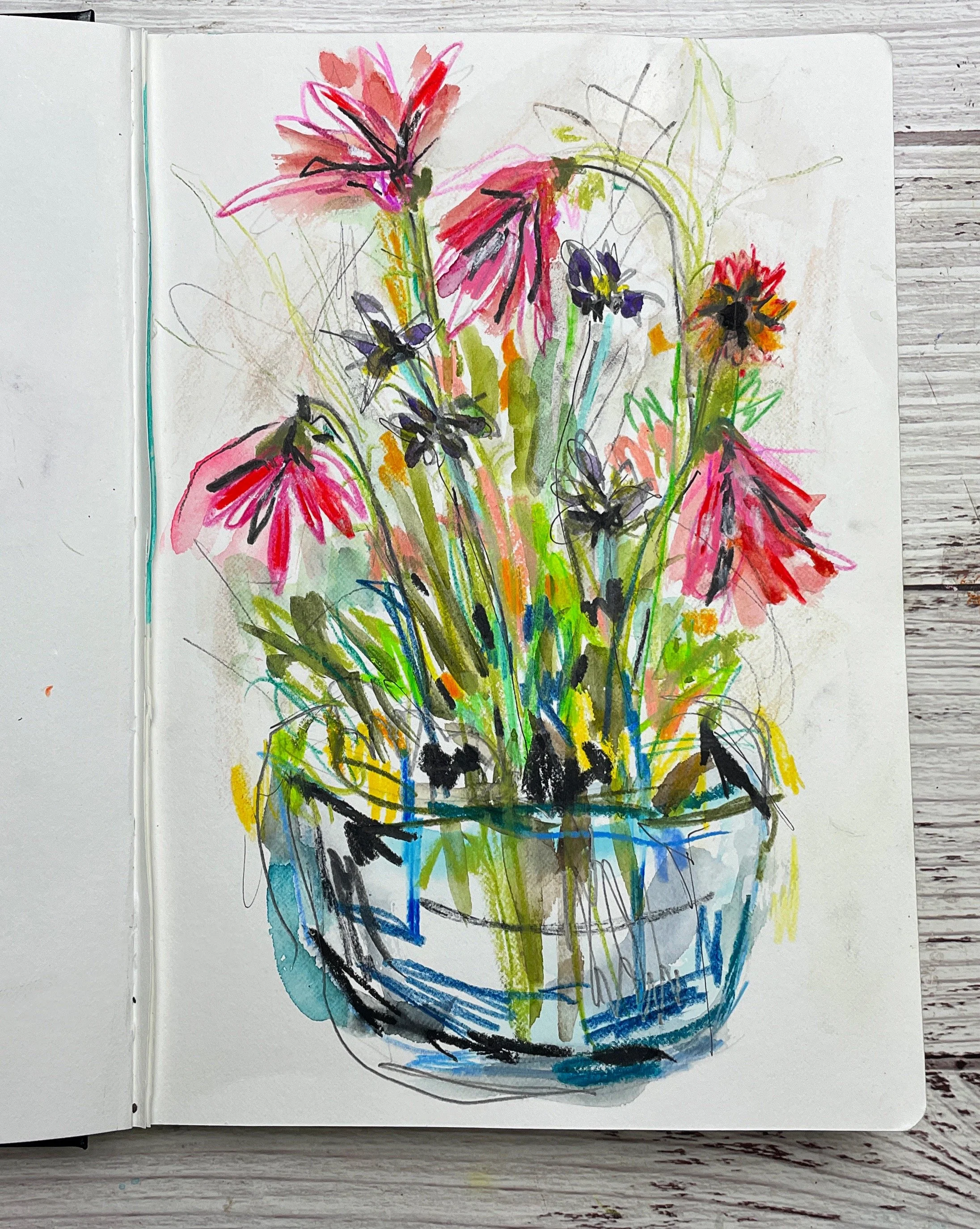
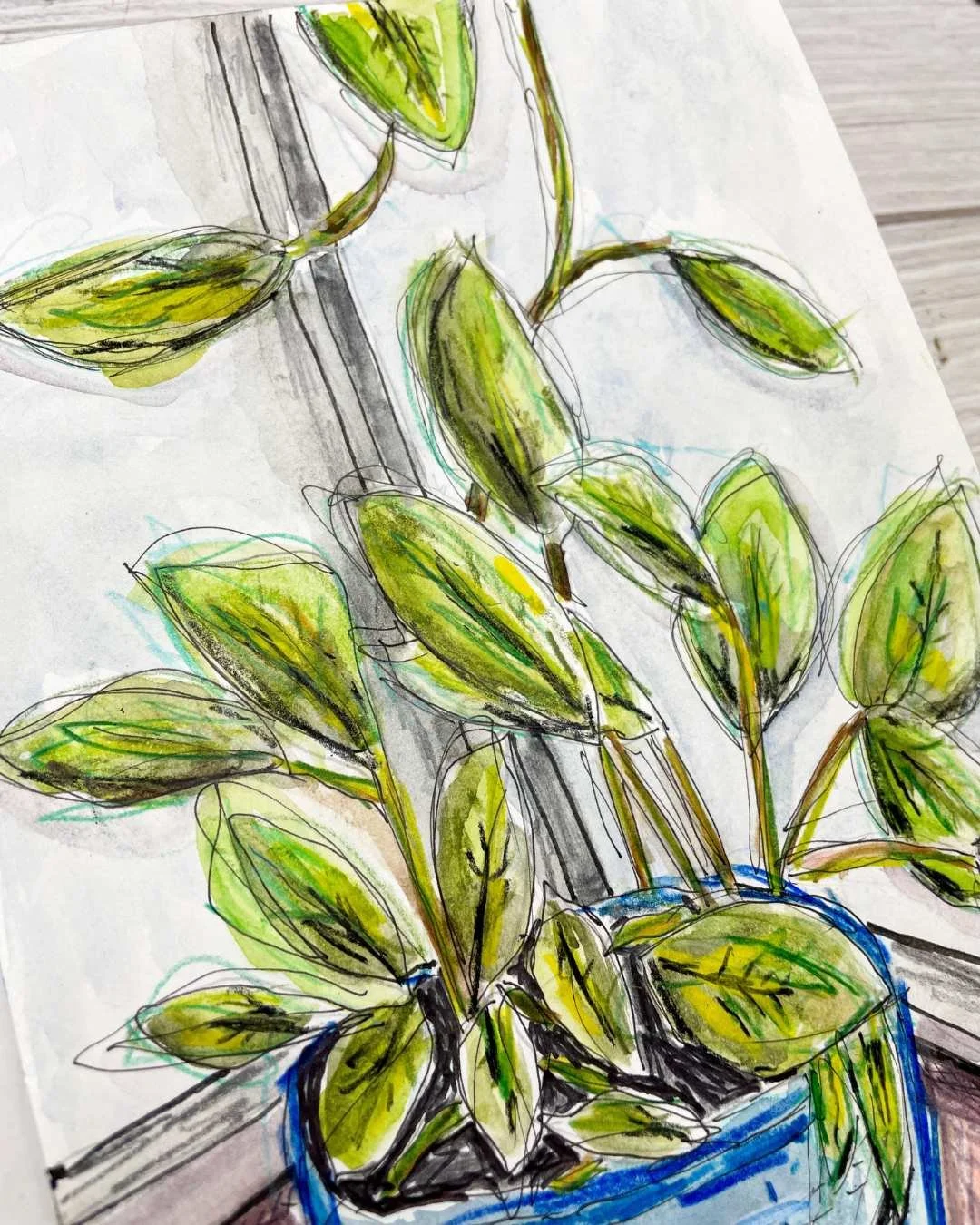
Watercolor mixed with colored pencils and pen for doodle marks. This combination felt most like me.


Teachers Who Inspired Me
If you’re interested in exploring a sketching practice of your own, here are the teachers, classes, and tools that made these first 10 days possible.
🔗 Susan Yeates: Susan has a vast amount of resources both free and paid for sketching HERE.
🔗 Viola Hortová: I joined Viola’s Patreon where she has a ton of videos and does live sketch alongs each month. Check out her Youtube and Instagram for lots of inspiration.
🔗 Nathalia Velásquez: Check out Nathalia’s Patreon for lots of sketching inspiration. During her live sessions, I have really enjoyed the timed sketching. It is challenging but fun to limit yourself to short sketching times. See her Youtube and Instagram for lots of inspiration.
🔗 Toby Haseler: I adore Toby’s loose style and easy teaching manner. Find him on Instagram and Youtube. He also has a free course called Become an Artist in Just One Week.
🔗 Amy Stewart: Youtube and Instagram and Skillshare
🔗 Ohn Mar Win: Patreon and Instagram
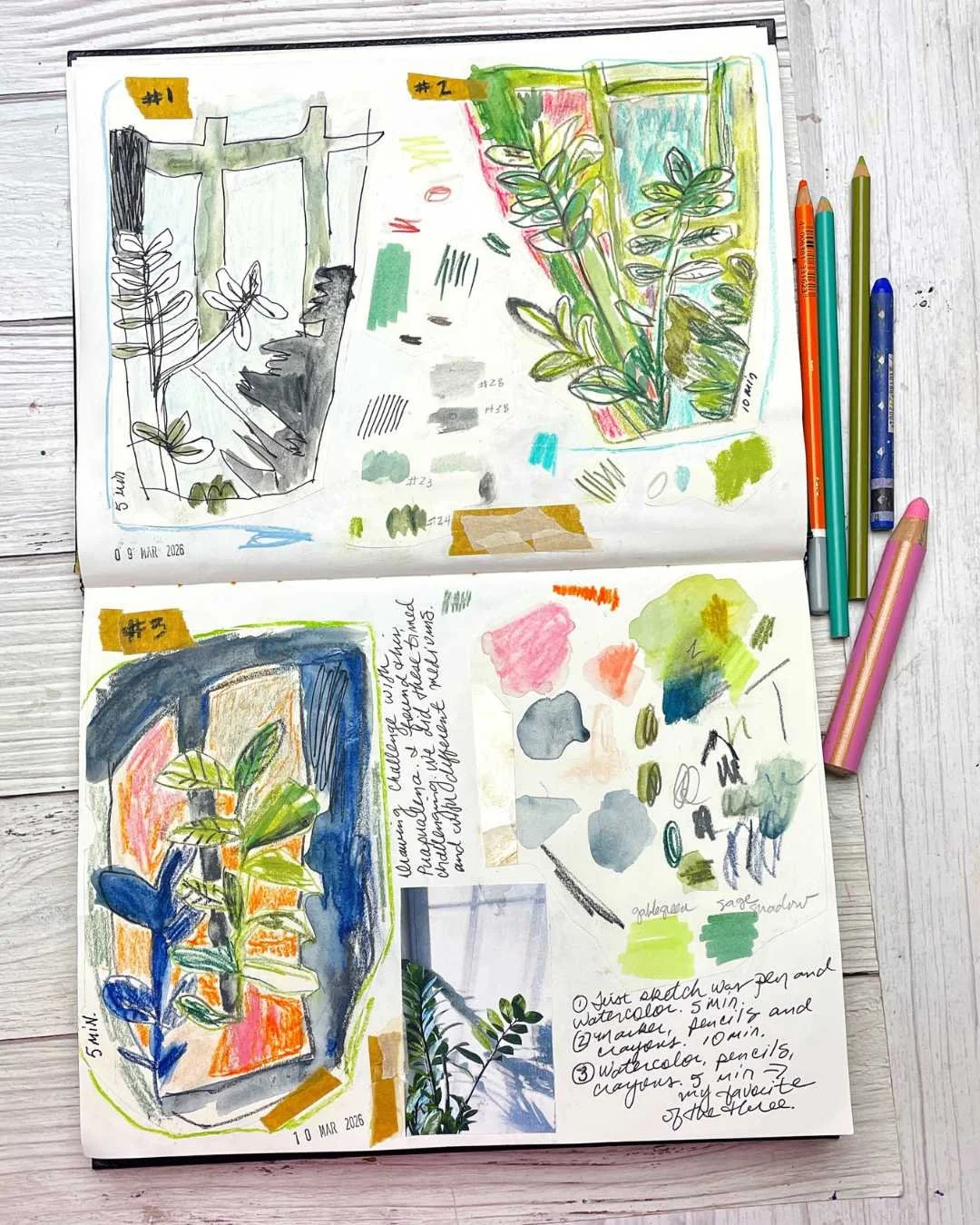


I still feel the struggle. Even now, sitting down to start is hard. I can’t say for certain whether I’ll keep sketching now that these 100 days are done.
But I know this: the question that kept me going wasn’t “can I do this?”
It was “what if I don’t?”
After 100 days, I didn’t want to look back and wonder what would have happened if I had just tried. And that — more than any finished page, more than any sketch I loved or hated — is what year ten gave me.
The courage to find out.
Curious to see all 100 days?
I’m sharing them all 100 days in one place. 👇🏻
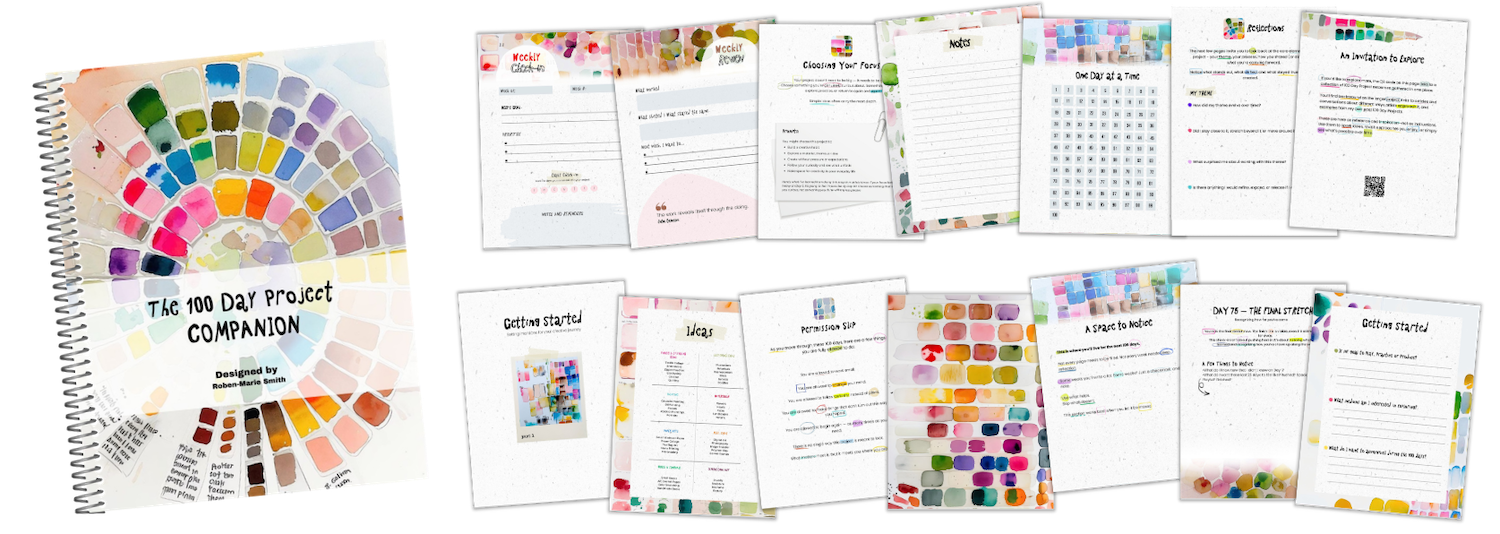
The 100 Day Project Companion
Available in Print + Digital download
Notice, Reflect and Stay Connected
Whether this is your first year or your fifth, having support without pressure makes all the difference. The 100 Day Project Companion offers gentle structure, thoughtful prompts, and space to notice what’s unfolding - without needing to track every detail or stay perfectly on schedule.
Pin for Later
DISCLAIMER: AS AN AMAZON ASSOCIATE I EARN FROM QUALIFYING PURCHASES. THIS PAGE CONTAINS AFFILIATE LINKS WHICH WILL REWARD ME MONETARILY OR OTHERWISE WHEN YOU USE THEM TO MAKE QUALIFYING PURCHASES.